
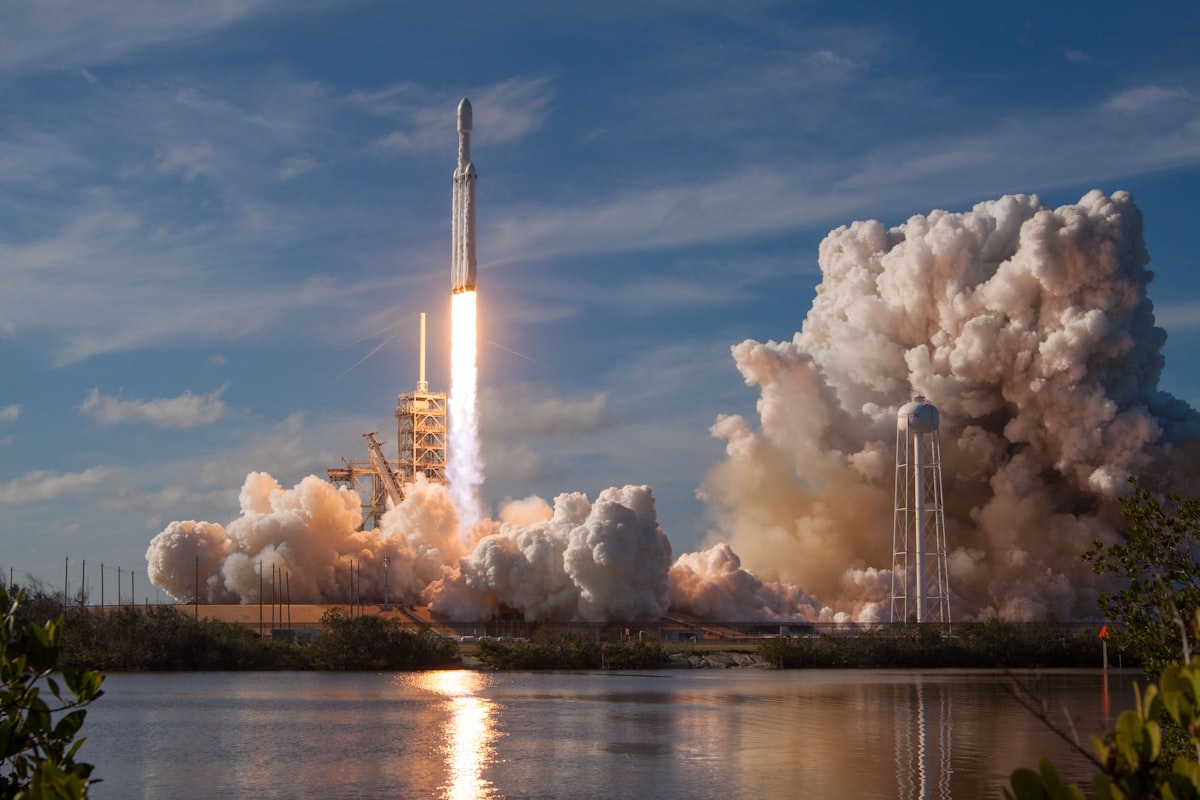
In a landmark deal that reshapes both the aerospace and artificial intelligence industries, SpaceX has officially acquired Elon Musk's AI startup xAI, creating the world's most valuable private company with a combined valuation of approximately $1.25 trillion.
The merger, announced Sunday, brings together SpaceX's unrivaled rocket launch capabilities and satellite manufacturing expertise with xAI's rapidly advancing artificial intelligence technology. The deal paves the way for what Musk describes as the future of AI infrastructure: space-based data centers.
A Vision for Space-Based AI Infrastructure
In a memo posted to SpaceX's website, Musk outlined the strategic rationale behind the merger, pointing to the immense power and cooling requirements of modern AI systems as a key driver.
"Current advances in AI are dependent on large terrestrial data centers, which require immense amounts of power and cooling. Global electricity demand for AI simply cannot be met with terrestrial solutions, even in the near term, without imposing hardship on communities and the environment."
The combined company plans to leverage SpaceX's deep expertise in rapid launch operations and satellite manufacturing to deploy a constellation of up to 1 million orbital data centers. These space-based facilities would provide the computing backbone needed to power xAI's operations while circumventing the energy constraints facing Earth-bound data centers.
Key Deal Details
- Combined Valuation: Approximately $1.25 trillion
- SpaceX Pre-Merger Valuation: $800 billion (from last year's secondary share sale)
- xAI Pre-Merger Valuation: $230 billion (from recent $20 billion funding round)
- xAI Monthly Burn Rate: Approximately $1 billion
- Planned Satellite Data Centers: Up to 1 million orbital units
Financial Lifeline for xAI
The merger provides a crucial financial lifeline for xAI, which has been burning through approximately $1 billion per month as it races to catch up with AI rivals like OpenAI and Anthropic. Founded later than its competitors, xAI has spent billions of dollars on infrastructure and talent acquisition to close the gap.
Recent investors in xAI's most recent funding round included technology giants Nvidia and Cisco Investments, along with longtime Musk company backers. In a notable move, Tesla announced last week that it was investing approximately $2 billion into xAI, further intertwining Musk's corporate empire.
IPO on the Horizon
The acquisition comes ahead of a highly anticipated public offering planned for mid-June, which could raise as much as $50 billion. SpaceX had already been preparing to go public, but the merger means xAI will now benefit from the capital raised by the enlarged entity.
The combined company's $1.25 trillion valuation would make it not only the world's most valuable private company but also position it among the most valuable public companies upon listing, rivaling the market capitalizations of Apple, Microsoft, and Nvidia.
Industry Implications
The merger signals a new frontier in the AI infrastructure race. While competitors have focused on building massive terrestrial data centers, often facing regulatory hurdles and community opposition over energy consumption, SpaceX-xAI's space-based approach could leapfrog these challenges entirely.
Industry analysts note that the combination of SpaceX's proven ability to manufacture and launch satellites at unprecedented scale—demonstrated through its Starlink constellation of over 6,000 satellites—with xAI's AI capabilities creates a vertically integrated powerhouse unlike anything the tech industry has seen.
The deal also raises questions about concentration of power in the tech industry, with Musk now controlling a company that spans rocket launches, satellite internet, and artificial intelligence—all critical infrastructure for the 21st century economy.
What's Next
The combined company is expected to begin deploying prototype orbital data center satellites within the next 18 months, with full-scale deployment targeted for 2028. Meanwhile, preparations for the June IPO are accelerating, with underwriters reportedly already receiving significant institutional interest.
For investors, the merger creates a unique opportunity to gain exposure to both the commercial space industry and the AI revolution through a single entity—assuming they can secure an allocation in what promises to be one of the most sought-after IPOs in history.